Dominoes: Gaming Tips for a Higher Score

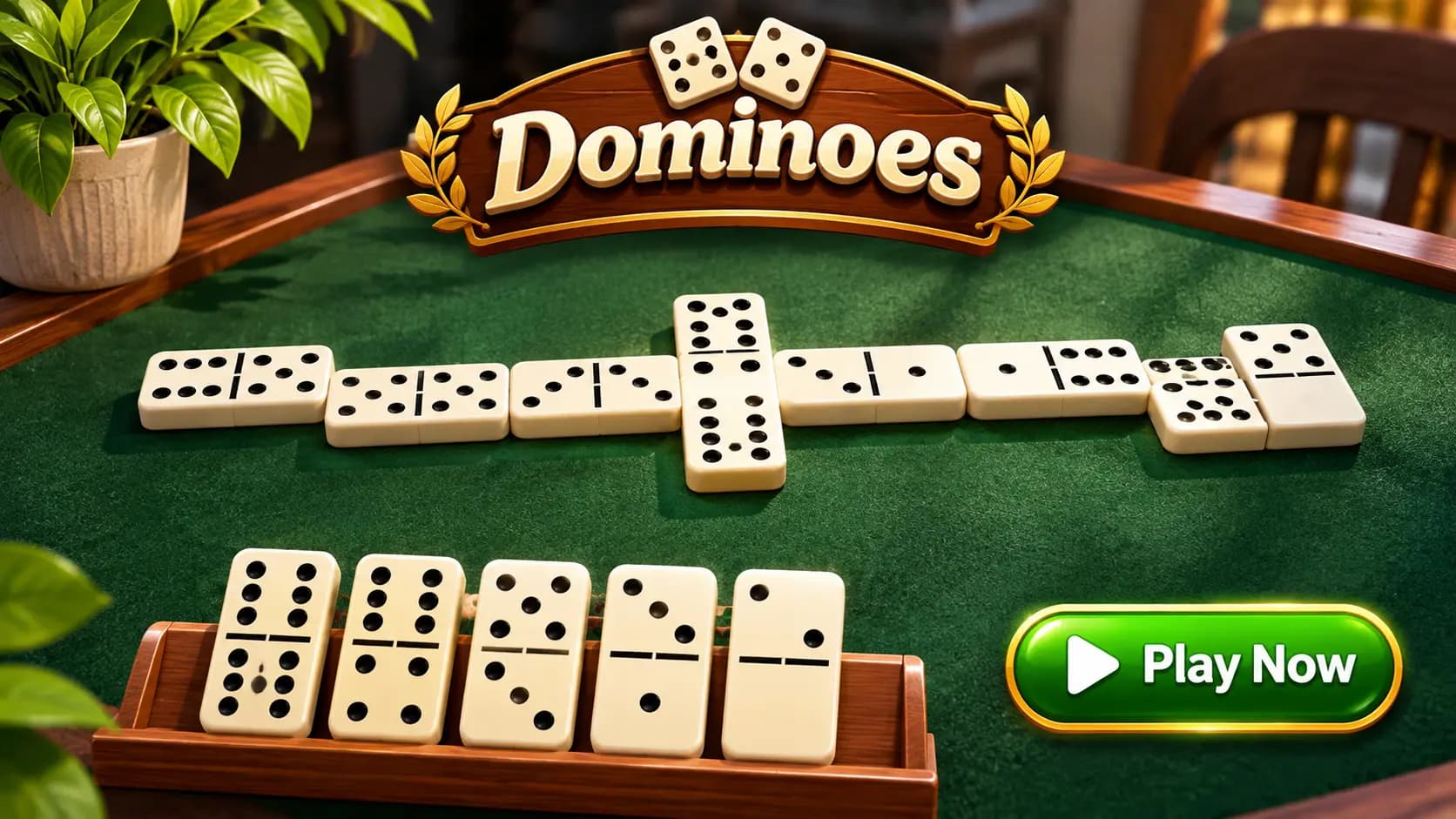
Play the heavy tile before the light one. A pass shows the two numbers they cannot answer, and the round pays the pips left in the other hands.
Table of Contents
Seven tiles each, from a double-six set of twenty-eight. The highest double on the table opens, so the first tile is the tile, not the seat. After that a tile has to match the number at one end of the line. Doubles lie crosswise. That is only how they look. They join on their own number, and a double-six is twelve pips, not twenty-four.
You sit two, three, or four. Easy plays any tile that fits. Normal sheds its heavy tiles first. Hard does that, and it remembers the numbers you could not play.
What a round pays
Open Dominoes.
Press a tile. If it fits one end, it goes down. If it fits both, those ends light and you press one. Tiles that fit neither end are dimmed. When the whole hand is dimmed, Draw takes one tile from the pile, then another, until something fits or the pile is empty. Pass exists only then. Sort moves the heavy tiles to the front of the hand.
Go out and you are paid the pips still in every other hand. If each player passes in turn, the line is blocked. The lightest hand is paid the pips in the hands that are not its own. Two hands level on that count are paid nothing.
You go out with an empty hand. Across the table a six-five and a two-one are still there. Eleven and three is fourteen, and fourteen is the round. On a blocked line those same tiles pay the other way. Three pips in your hand and fourteen in theirs pays you the fourteen. Fourteen in yours and three in theirs pays them.
Three hands on a block use one more total. Hands of four, eleven, and eight: the four is light, and it is paid the eleven and the eight, nineteen. Nobody went out. The line stopped.
How many tiles the pile still holds
Twenty-eight tiles, seven each. Two players are dealt fourteen, so fourteen remain in the pile. Three players are dealt twenty-one, so seven remain. Four players are dealt all twenty-eight. The pile is empty before anyone plays.
With two players you can miss the opening number and still pull toward it. Fourteen tiles is room to find a five. With three players the pile is seven. A run of draws can finish it, and the next miss is a pass.
With four players Draw never lights on the first turn. They open double-five and you hold no five. The hand is dimmed, and Pass is the only button. Both ends are five, so the pass tells the table you were dealt no five. There is no tile in a pile to change that hand, and no pile to make it heavier. The numbers in the original seven are the only numbers you will see.
A hand of forty-eight
Sort puts this hand in front of you: double-six, six-five, five-four, double-four, three-one, two-blank, double-one. The pips are twelve, eleven, nine, eight, four, two, and two. Added, that is forty-eight. Forty-eight is what the other players are paid if they go out while you still hold it.
The double-six is the highest double, so you open on it. Both ends of the line are six. The hand falls from forty-eight to thirty-six.
The six-five meets one of those sixes. Eleven pips leave, and that end becomes a five. The far end is still a six. You are at twenty-five. The double-one does not meet a six. The two-blank does not either. They wait because they have no end, not because they are being saved for later.
The five-four meets the five and leaves a four. Twenty-five minus nine is sixteen. The far end is still the opening six. The double-four meets the new four. Both halves are four, so that end is a four again, and the far end is still six. Sixteen minus eight is eight. Left in the hand: three-one, two-blank, double-one.
None of those meets a four or a six. Draw lights. The tile that comes up is a four-one. It meets the four and leaves a one. The ends are now one and six. The double-one meets the one, and two pips leave. The three-one meets the one the double just set, and leaves a three. The two-blank is alone, with no two and no blank showing. One more draw. A three-two meets the three and leaves a two. The two-blank plays, and the hand is empty.
That empty hand is the round. You are paid whatever the other hands still hold. The forty-eight was never theirs to take, because each heavy tile met an end while it could.
A double with no home is the other case. A double-five while the ends are four and six cannot be played. It is ten pips in the hand until a five is an end. The double-four in the hand above could be played only because the five-four had already made a four.
You did not open
The highest double is across the table. They open double-five. Both ends are five. A four-two in your hand will not press. Draw lights, and tiles come off the pile one at a time until a five shows or the pile is empty.
Three tiles can arrive before that five. They were not in the deal. They are pips added because the opening number was missing. A five-two finally plays, the covered end becomes a two, and the hand is larger than the seven you were dealt.
The one five nobody has seen
Every number from nought to six is on seven tiles. The fives are the five-blank, the five-one, the five-two, the five-three, the five-four, the double-five, and the five-six. The five-blank is easy to skip in a count. It is still a five.
Six of them on the line means one is missing. Name it. It is in a hand or in the pile, and it is the only answer to a five. When you may choose the end, leave that five showing. Play your own last five onto it and the end is answered once. The next five, you have nothing for.
The two numbers a pass admits
A pass is the pile empty and no tile for either end. The two numbers showing are two numbers that hand does not contain.
The next tile you play can put one of those numbers back at an end. They pass again. The other end is free for a tile you still want to shed. Hard uses your pass this way and keeps shedding its own heavy tiles. Easy plays whatever fits, so a pass against Easy does not come back as a closed end. While the pile still has tiles, a third number and a fourth in the hand delay that pass until the closed numbers are ones you can spare.
A six-three when both ends are lit
The ends are a six and a three. You hold a six-three. Either press takes it out of the hand. Both ends light, and the game waits.
They passed with a six showing. Press the six. The three stays up for a later tile, and they meet a six they have already failed. Press the three and that six is gone. The end they could not answer has been removed. A heavier tile that fits the three can wait one turn. The six will not still be there if you cover it now.
The line bends when it runs out of table. The bend does not create a new end. The two numbers are still the only places a tile can join.
Past the target, not on it
Before the first deal the target is fifty, a hundred, or a hundred and fifty. Rounds go on until a score passes it. The score does not have to land on the number. Forty-six, then a round of fourteen, is sixty. Sixty has passed fifty, and the match ends on that deal.
One match can run this way. Fourteen on the first deal, nineteen on the next block, and you are at thirty-three. They take a round of twenty and sit at twenty while you stay at thirty-three. Another fourteen puts you at forty-seven. The fourteen after that is sixty-one. Fifty was passed without a round that equalled fifty. A hundred and fifty uses those same pips and takes more deals.
Carrom is the other table where the first piece sunk chooses the side. The queen stays won only when a man of that colour covers her.
More of the collection is on Pokky Game.
Written by

Navinkumar Ahir
The studio
Navinkumar Ahir is a content creator and part of the team behind Pokky Game, a free online gaming platform featuring a wide variety of puzzle, arcade, racing, shooting, and sports games. He focuses on creating helpful gaming guides, tips, and strategies based on real gameplay, helping players discover new games, learn how to play, and overcome challenging levels. His goal is to make gaming simple, enjoyable, and accessible to everyone, with no downloads or account required.